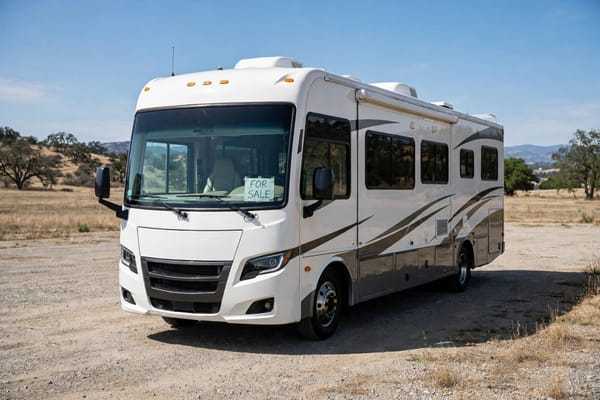
Class B vs. Class C RV: Which Should You Actually Buy in 2026?


Class B Camper Van vs. Class C Motorhome: The Core Trade-Off
Deciding between a Class B camper van and a Class C motorhome is the single most common crossroads in motorized RV shopping. While both offer self-contained travel without the need to hitch up a trailer, they deliver radically different ownership experiences once you hit the highway:
- Class B Camper Van: Built entirely inside a commercial cargo van chassis (such as a Mercedes-Benz Sprinter, RAM ProMaster, or Ford Transit). It delivers agile handling, standard parking-space compatibility, and strong fuel economy (16–22 MPG), but caps practical sleeping capacity at 1–2 adults and relies on compact galley and wet bath configurations.
- Class C Motorhome: Built onto a heavy-duty cutaway chassis with a wide fiberglass body and signature over-cab bunk. It offers dedicated bedrooms, multi-person sleeping capacity (4–8 people), separate dry bathrooms, and slide-out living space, but requires designated RV parking, wider turning radiuses, and higher fuel budgets (8–14 MPG).
On RV Matcher, search trends reveal that buyers rarely get stuck on styling—they get stuck on daily drivability, campground access, fuel costs, and living comfort. This guide addresses the exact operational differences to help you choose the right platform with complete confidence.
What Is the Core Difference Between a Class B and a Class C RV?
The fundamental difference lies in chassis architecture:
- Class B (Camper Van): Built entirely within the original steel body and frame of a standard commercial cargo van (Sprinter, Transit, or ProMaster), typically measuring 17 to 24 feet.
- Class C (Mini-Motorhome): Built by attaching a wider, box-built coach body onto an automotive cutaway chassis (Ford E-Series, Chevy Express 4500, or Super C Freightliner), distinguished by its signature cab-over loft/bed, typically measuring 24 to 33+ feet.
Every downstream difference—from highway fuel economy to interior shower size—stems from this single architectural trade-off: maneuverability vs. square footage.
Class B vs. Class C: Side-by-Side Comparison
| Feature | Class B Camper Van | Class C Motorhome |
|---|---|---|
| Typical Length | 17 – 24 feet | 24 – 33+ feet |
| Typical New MSRP | $120,000 – $220,000+ | $85,000 – $170,000+ |
| Average Fuel Economy | 16 – 22 MPG (Gas/Diesel) | 8 – 14 MPG (Gas/Diesel) |
| Sleeping Capacity | 2 adults (select pop-tops: 3–4) | 4 – 8 people (Bunkhouse/Loft) |
| Bathroom Layout | Compact wet bath (combined shower/toilet) | Full dry bath (separate stand-up shower) |
| Driving Dynamics | Drives like a full-size passenger van | Drives like a mid-size commercial box truck |
| Parking & Storage | Standard driveway, city streets, trailhead lots | Designated RV storage pad, campground sites |
| Campground Access | Fits 100% of state & national park sites | Restricted on vintage or short-length sites (<25 ft) |
| 5-Year Resale Value | Highest in motorized industry | Standard, predictable depreciation |
| Target Buyer | Couples, solo nomads, road trippers | Families, full-timers, multi-week campers |
Mobility vs. Livability: Deciding Your Priority
- Choose Class B for Spontaneity: If you prioritize seamless parking, driving through tight downtowns or national park trailheads, setting up camp in seconds, and achieving up to 20+ MPG, the compact camper van delivers unmatched freedom.
- Choose Class C for Living Comfort: If you travel with kids, need private sleeping quarters, want a dedicated residential dry bath, or plan to spend long stretches inside during bad weather, a Class C offers double the interior volume at a significantly lower cost-per-square-foot.
Which Is Cheaper: Class B or Class C? (Upfront Price vs. Long-Term Cost)
A Class C motorhome is almost always cheaper to buy, but a Class B camper van is significantly cheaper to own.
Understanding this distinction is the key to calculating your true multi-year cost of ownership:
- Initial Purchase Price (Advantage: Class C): New entry-level Class C motorhomes generally start between $85,000 and $130,000, delivering full kitchenettes, slide-outs, and multi-bed capacity at an accessible price-per-square-foot. Conversely, factory Class B camper vans start between $120,000 and $160,000+ due to the high labor and precision engineering required to fit full electrical, plumbing, and cabinetry systems inside an unexpanded steel OEM van body.
- Fuel & Road Travel (Advantage: Class B): Operating a Class B (averaging 16–22 MPG on gas or diesel platforms) costs roughly 40% to 50% less at the pump than driving a wide-body, aerodynamically heavy Class C (averaging 8–14 MPG). On a 5,000-mile cross-country road trip, a Class B can save you $600 to $1,000+ in fuel alone.
- Storage & Parking Costs (Advantage: Class B): At 19 to 24 feet, most Class B vans fit in standard residential driveways, curbside spaces, and HOA-compliant garages. A 26- to 32-foot Class C typically requires a dedicated commercial outdoor or covered storage facility space, adding $100 to $300+ per month ($1,200–$3,600/year) in fixed overhead.
- Depreciation & Value Retention (Advantage: Class B): Class B camper vans enjoy the highest resale retention in the RV industry, flattening out after initial years while maintaining high liquidity. Class C motorhomes follow a steeper standard depreciation curve, losing value faster due to wood-frame/fiberglass construction aging and higher chassis mileage.
The Pre-Owned Equalizer
If purchase budget is your primary constraint, shopping the verified secondary market levels the playing field. Clean, 3- to 6-year-old models in both categories routinely list on RV Matcher for 30% to 45% below original MSRP—allowing you to skip the steepest depreciation while acquiring reliable, road-ready equipment.
Fuel Economy Comparison: Class B vs. Class C
Class B camper vans deliver roughly double the fuel economy of traditional Class C motorhomes, making them significantly more economical for high-mileage road trips and remote work travel.
- Class B Camper Vans (16–22 MPG): Aerodynamic steel van bodies, lower curb weights, and efficient powertrains (such as the 3.0L Mercedes-Benz V6/I4 Turbo Diesel or 3.6L Pentastar V6 gas) keep highway fuel consumption remarkably close to a standard SUV.
- Class C Motorhomes (8–14 MPG): Wide fiberglass bodies, heavy dual-rear-wheel axles, and high cabover profiles create substantial aerodynamic drag. Large displacement engines (like the Ford 7.3L "Godzilla" V8 or older 6.8L Triton V10) require significantly more fuel under load.
Annual Fuel Cost Breakdown (Based on 10,000 Miles/Year)
| Metric | Class B Camper Van (Diesel / Gas) | Class C Motorhome (Gasoline) |
|---|---|---|
| Average MPG | ~18 MPG | ~10 MPG |
| Gallons Used per 10k Miles | ~556 Gallons | ~1,000 Gallons |
| Estimated Annual Fuel Cost | ~$2,200 – $2,800 | ~$3,800 – $4,500 |
| Annual Fuel Savings | $1,500 – $2,200+ Saved Annually | Baseline |
For frequent travelers driving 10,000 to 15,000 miles annually, fuel savings alone can offset a significant portion of insurance or routine maintenance costs over a multi-year ownership period.
Which Is Easier to Drive and Park?
Class B camper vans win the drivability and parking category decisively. Because a Class B maintains the original factory dimensions of a commercial van chassis, it handles with the agility of a full-size passenger vehicle—making it approachable for first-time RV owners.
Driving & Maneuverability Breakdown
- Class B Camper Vans (Daily-Driver Drivability):
- Parking Versatility: At 17 to 24 feet long and roughly 7 feet wide, Class Bs fit into standard 20-foot parking spots (often by backing in slightly) and require zero special parking arrangements at grocery stores or trailheads.
- Vertical Clearance: Heights generally range from 8'6" to 10'0", allowing clearance under most drive-through overhangs, bridges, and tree-lined backroads.
- Tight Roads & Switchbacks: Built-in driver assist tech (lane-keeping, blind-spot monitoring, crosswind assist) and a tight turning radius make mountain passes and downtown traffic stress-free.
- Class C Motorhomes (Truck-Style Handling):
- Parking Logistics: Measuring 24 to 33+ feet with an 8.5-foot width, Class Cs require double pull-through spaces, designated oversized parking, or empty exterior commercial lots.
- Vertical Clearance & Tail Swing: Ranging from 10'6" to 12'0"+ in height, Class Cs require careful attention to gas station canopies and low-clearance bridges. Significant rear overhang behind the axle also creates "tail-swing" when making sharp turns in gas stations or campgrounds.
- Blind Spots & Wind Push: The wide coach body catches lateral crosswinds on open highways, requiring a more deliberate, two-handed driving style similar to operating a commercial box truck.
The Usability Reality
Drivability is the factor first-time buyers underestimate most. If the intimidation of navigating a 30-foot coach prevents you from taking spontaneous weekend trips, the smaller Class B you feel confident driving will always deliver more real-world value than a spacious Class C that sits parked in a storage lot.
Which RV Offers More Usable Living Space?
Class C motorhomes win the interior space and livability category hands down. The wide-body construction, slide-out rooms, and over-cab architecture give a Class C the layout and feel of a small residential apartment, whereas a Class B functions more like a compact, high-efficiency capsule.
Interior Living Space & Layout Breakdown
- Class C Motorhomes (Residential Comfort & Dedicated Zones):
- Square Footage: Typically offers 200 to 320+ square feet of interior space, expanding significantly when slide-outs deploy at camp.
- Dedicated Sleeping Areas: The signature cab-over bunk provides a permanent sleeping loft for kids or guests without eating into the main floor plan, while the rear features a private walk-around queen or king bedroom.
- Full Dry Bath: Features separate, dedicated compartments for the toilet, sink, and walk-in stand-up shower—meaning no wet toilet seats after showering.
- High Sleeping & Dining Capacity: Seamlessly accommodates 4 to 8 travelers with dedicated dinettes, pull-out sofas, and bunkhouse configurations.
- Class B Camper Vans (High-Efficiency, Multi-Use Footprints):
- Square Footage: Averages 90 to 140 square feet total, keeping movement restricted to a single center aisle.
- Multi-Functional Furniture: Space requires daily conversion—rear sofas fold down into beds each night, dinette tables must be stowed for transit, and front cab seats swivel to become the primary lounge seating.
- Wet Bath Realities: Most vans utilize a compact wet bath where the shower, cassette/marine toilet, and fold-down sink share the exact same 3x3-foot enclosure.
- Capacity Limit: Best suited for solo adventurers or couples; traveling with more than two adults or small children requires constant gear rearrangement.
The Livability Verdict
A family of four or five can comfortably take multi-week cross-country vacations in a Class C without feeling claustrophobic during rainy days inside. In a Class B, that same group will feel cramped by day two.
If your travel involves long stays at designated campsites, remote family vacations, or extended full-time living, the dedicated zones and slide-out volume of a Class C provide vastly superior comfort.
Which Motorhome Holds Its Value Better? (Resale & Depreciation)
Class B camper vans hold their resale value better than any other motorized RV category. High sustained demand for agile, off-grid-capable travel continues to outpace supply on the secondary market, giving van owners a distinct financial advantage when it comes time to sell.
Resale & Value Retention Breakdown
- Class B Camper Vans (Strongest Value Retention & Fast Liquidity):
- All-Steel Factory Construction: Built inside OEM automotive steel bodies rather than custom composite boxes, Class Bs avoid the exterior delamination, wall flexing, and roof-seam degradation common in older coach builds.
- High Buyer Demand: Compact footprint and fuel efficiency attract broad demographics—from solo remote workers to retirees—keeping the resale buyer pool large.
- AWD/4x4 Premium: High-spec models (such as 4x4 Sprinters, AWD Transits, and factory lithium packages) routinely sell within days of listing on the pre-owned market.
- Class C Motorhomes (Standard Depreciation Curve):
- Steeper Early Value Drop: Class Cs follow standard RV depreciation curves, shedding 20% to 30% of their initial value over the first 3 to 4 years.
- Age-Sensitive Exterior Maintenance: Buyer scrutiny focuses heavily on cabover seam integrity, roof maintenance history, and tire wear on dual rear wheels.
- Family Floor Plan Floor: While overall depreciation is faster, well-maintained family floor plans (especially bunkhouse models under 28 feet) maintain steady, predictable demand on the private market.
The Marketplace Velocity Reality
On RV Matcher, competitively priced Class B camper vans generate buyer inquiries faster than nearly any other vehicle category on the platform. If you plan to travel for two to three years and then exit the lifestyle, a Class B provides superior asset protection and faster cash liquidity.
So, Which Motorhome Should You Buy in 2026?
Choose a Class B Camper Van if:
- You travel solo or as a couple: You do not need extra beds and prefer a streamlined, high-efficiency living setup.
- Agility and off-grid access are your priorities: You want to parallel park in downtown areas, navigate tight national park switchbacks, fit into any standard campsite, and average 16–22 MPG on the highway.
- You want strong asset protection: You prefer a vehicle built with automotive-grade steel that holds industry-leading resale value and sells quickly on the pre-owned market.
- Next Steps: Explore our guide to the Best Class B Camper Vans of 2026 or target high-value pre-owned rigs in our Best Used Class B Vans Under $50,000 roundup.
Choose a Class C Motorhome if:
- You travel with kids, guests, or pets: You require permanent over-cab lofts, rear queen bedrooms, and multi-passenger seating belts.
- Interior livability matters most: You want a full dry bathroom with a standalone walk-in shower, slide-out living space, and a residential galley for cooking full meals at camp.
- You want the best space-per-dollar value: You want to maximize your interior square footage and total sleeping capacity at a lower upfront purchase price.
- Next Steps: Compare mid-size family bunkhouses and compact 24-foot Class C floor plans to see which balance of size and towability fits your vehicle needs.
The Smart Buyer's Test: Rent Before You Buy
If you are still torn between the two, rent a Class B for a weekend trip, then rent a 26- to 30-foot Class C for your next outing. Experiencing highway crosswinds, backing into a tight campsite, cooking dinner, and using the bathroom in real-world conditions will clarify your travel priorities faster than reading spec sheets.
When you are ready to purchase, search thousands of verified dealer and private-seller listings on RV Matcher to compare specs side by side, track pricing trends, and connect with owners directly in real time.
Where to Find and Buy Class B & Class C RVs in 2026
Finding the right motorhome at a fair market price requires shopping on a modern marketplace where inventory updates in real time and communication is direct. Rather than wading through stale classifieds, duplicate broker listings, or third-party lead forms, RV Matcher is engineered around how RVers actually shop:
- Smart Matching & Precision Filtering: Filter nationwide inventory by chassis type, sleeping capacity, towing limits, dry bath vs. wet bath layouts, and exact budget parameters to pinpoint the rigs that align with your travel style.
- Direct Real-Time Messaging: Connect with verified private owners and certified dealerships instantly inside the platform to review maintenance records, confirm specs, and negotiate directly without middleman call centers.
- Proactive Security & Spam Protection: Browse with confidence—automated threat detection removes bot listings, marketplace scrapers, and phantom inventory before they ever reach your feed.
Explore thousands of new and verified pre-owned Class B camper vans and Class C motorhomes nationwide on RV Matcher, track real-time price drops, and connect with motivated sellers today.
Frequently Asked Questions: Class B vs. Class C Motorhomes
Is a Class B or Class C motorhome better for beginners? It depends on whether your biggest concern is driving intimidation or campsite comfort. A Class B camper van is ideal for first-timers nervous about maneuvering, highway winds, or parking, as it handles like a standard full-size passenger van. A Class C motorhome is often better for beginners prioritizing interior usability—offering intuitive residential conveniences like dedicated dry bathrooms, permanent beds, and slide-out floor plans at an accessible purchase price per square foot.
Can a family of four comfortably travel in a Class B? While select camper vans feature pop-top roof lofts or convertible lower dinettes that sleep four (such as the Winnebago Solis or Thor Sequence), extended travel remains tight. Interior gear storage is limited, and managing luggage, groceries, and rainy days inside a 140-square-foot space requires constant compromise. For multi-week family trips, a compact 24- to 28-foot Class C motorhome provides significantly better living privacy, storage, and long-term comfort.
Do Class B camper vans really hold their value better than Class Cs? Yes. Class B motorhomes consistently demonstrate the slowest depreciation and highest resale value retention in the RV industry. Because they are constructed within durable factory OEM steel bodies—eliminating the exterior seam leaks and wall delamination risks common in aging coach builds—well-maintained used vans maintain strong pricing floors and fast buyer turnaround on RV Matcher.
Why not just buy a Class A motorhome instead? Class A motorhomes deliver expansive square footage, massive basement storage, and luxury appointments, but they come with significant ownership overhead. They carry the steepest depreciation curves, demand commercial-level maintenance, struggle to fit into most state and national park campsites, and average just 6 to 10 MPG. Buyers cross-shopping Class B and Class C rigs are generally looking for manageable footprints, lower travel costs, and approachable driving dynamics that a 35-foot Class A cannot deliver.
Ready to compare real listings side by side? Start your search on RV Matcher—the modern RV marketplace engineered to help you filter by chassis, compare floor plans, and connect directly with verified sellers nationwide.