How to Negotiate the Best Price on an RV (Dealer Playbook)
How to negotiate RV price like a pro: out-the-door pricing, dealer fee traps, timing leverage, competing written quotes, and using inspections to renegotiate.

Learning how to negotiate RV price is worth more than any coupon, rebate, or "sale event" a dealership will ever advertise. RV sticker prices — especially on new units — carry significant markup, and dealers expect negotiation. The buyers who pay full asking price are simply the ones who didn't know the game.
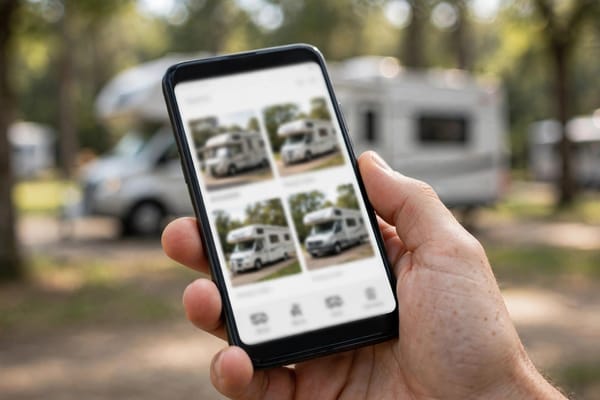
This is the buyer-focused playbook: how to negotiate the out-the-door price instead of the monthly payment, the fee traps dealers use to claw back discounts, how timing gives you leverage, why pre-approval is a weapon, how to get competing quotes in writing, and how to use inspection findings to renegotiate on used RVs. When you're ready to put it into practice, browse RVs for sale on RV Matcher and start comparing real asking prices.
How to Negotiate RV Price, Rule One: Out-the-Door Price, Not Monthly Payment
The moment a negotiation shifts to monthly payments, you've lost control of the math. A dealer can hit any monthly payment you name by stretching the term, padding the rate, or rolling fees into the loan — while the actual price you pay climbs.
Anchor every conversation on the out-the-door (OTD) price: the vehicle price plus all taxes, title, registration, and legitimate fees, minus any discounts. Get that number in writing before discussing financing, trade-ins, or monthly payments. Everything else is a distraction until the OTD price is settled.
When the salesperson asks "what monthly payment are you looking for," the answer is: "Let's agree on the out-the-door price first, then we'll talk about how I pay for it." Say it friendly, say it firmly, and don't move off it.
Know the Fee Traps: PDI, Doc Fees, and Prep
Dealers discount the RV, then quietly add the profit back in fees. Know the common ones so you can challenge or refuse them:
PDI / prep fees (pre-delivery inspection). Often hundreds of dollars charged to "inspect and prepare" the RV — work the dealer should do anyway before selling a vehicle. This fee is highly negotiable; many buyers get it reduced or removed entirely.
Documentation fees. Dealers charge for processing paperwork. Some doc fees reflect real administrative cost; inflated ones are pure margin. Ask what the fee covers, compare it against what's typical in your state, and negotiate it down or ask for an offsetting discount elsewhere.
Dealer add-ons. Paint protection, fabric guard, nitrogen-filled tires, VIN etching — high-margin extras presented as already installed or strongly recommended. You can almost always decline them. If they're "already applied," treat their cost as negotiable.
Extended warranties and gap insurance in the finance office. These are profit centers, not necessities. Never decide on them under pressure in the finance office — you can buy a warranty later, after research, often for less.
The counter-move: once you've agreed on a vehicle price, ask for an itemized OTD breakdown in writing. Question every line that isn't tax, title, or registration. Legitimate fees survive scrutiny; padded ones tend to shrink when examined.
How to Negotiate RV Price With Timing Leverage
Dealers negotiate hardest when they need the sale most. Time your purchase around their pressure points:
End of the month. Salespeople and managers chase monthly quotas and bonuses. The last few days of the month are when "let me talk to my manager" turns into real concessions.
End of the quarter. Quarterly pressure is monthly pressure multiplied — bigger bonuses, bigger flexibility.
Model-year changeover. When next year's models arrive, current-year inventory becomes a liability. Dealers pay floorplan interest on every unit sitting on the lot, and last year's models have to move. This is consistently one of the strongest buyer windows.
RV show season aftermath. Shows generate buzz but not every show lead converts. Follow up on show inventory in the weeks after — dealers are motivated to keep the momentum going.
Winter (in most markets). Foot traffic drops, carrying costs don't. Off-season buyers who show up with financing ready are exactly who a sales manager wants to see. For the full seasonal breakdown, see our guide to the best time to buy an RV.
Get Pre-Approved Before You Walk In
Pre-approval is negotiating leverage disguised as paperwork. Here's why it changes the dynamic:
It removes their financing profit. A big chunk of dealer profit hides in the finance office — marked-up rates and packed-in products. Walking in with your own pre-approval from a bank, credit union, or RV-specialist lender takes that profit center off the table.
It makes you a cash-equivalent buyer. Sellers — dealers and private parties alike — take pre-approved buyers more seriously because the deal is far more likely to close. That seriousness translates into better prices.
It sets your ceiling. Knowing your approved amount and rate keeps you from falling in love with payments you can't afford and gives you a firm walk-away number.
Then let them try to beat it. Get pre-approved first, then give the dealer's finance office one chance to beat your rate. If they can, great — if they can't, you already have your financing. Our RV financing guide covers where to apply and how approval works.
How to Negotiate RV Price With Competing Written Quotes
One quote is a take-it-or-leave-it. Three quotes are a negotiation.
Email multiple dealers for OTD quotes on the same (or equivalent) unit. Be specific: year, make, model, floor plan, and options. Ask each for an itemized out-the-door price in writing — email gives you a paper trail and keeps the conversation factual instead of emotional.
Use quotes against each other honestly. "Dealer B quoted me this OTD number — can you beat it?" is fair, effective, and standard practice. Dealers do this to each other all day; you're just joining the game.
Include private-party listings in your research. Knowing what the same RV sells for privately — check recently sold listings — tells you whether the dealer's price is defensible. A dealer asking far above private-party value needs to justify it with warranty, reconditioning, or convenience.
Watch for the phantom discount. "We're already $5,000 under MSRP!" only matters if the MSRP was real and the OTD number is clean. Some dealers inflate the starting price so the discount looks heroic. Competing OTD quotes expose this instantly.
Negotiating With Private Sellers
Private-party negotiation plays by different rules — there's no finance office, but there's also no manager to appeal to. The seller is often emotionally attached and working from a number they chose themselves.
Do your homework first. Look up comparable active and sold listings so your offer is grounded in data, not vibes. Sellers respect buyers who've done research — "similar units sold recently for around X" beats "would you take way less?"
Ask why they're selling. Upgrading, health changes, lifestyle shifts — a motivated seller with a timeline is more flexible than someone testing the waters. Our guide to buying from a private seller covers the full safe-transaction process.
Make clean offers. Price, closing date, payment method — no games, no lowball theater. Sellers choose the buyer they trust, and trust starts with a straightforward offer.
Leave room, but don't insult. Offering moderately below asking with justification (comparable sales, upcoming maintenance needs) keeps the conversation alive. Extreme lowballs end it.
Use Inspection Findings to Renegotiate
On used RVs, the inspection isn't just due diligence — it's your second negotiation.
Always inspect before finalizing price (or negotiate an inspection contingency into the deal). A professional RV inspection routinely surfaces issues the seller didn't know about or didn't disclose: soft spots, aging tires, worn seals, appliance problems.
Convert findings into dollars. Every legitimate issue is a renegotiation point: "The inspection found the tires are six years old and the roof needs resealing — that's roughly this much in upcoming maintenance, so I'd like to adjust the price accordingly." Be specific, be reasonable, and bring the inspection report.
Know what's a walk-away issue vs. a discount issue. Water intrusion and structural damage are walk-away issues on most used RVs. Worn tires, aging batteries, and minor seal maintenance are discount issues — normal wear you can price in. Don't try to renegotiate a unit with fundamental problems into a good deal; walk away and keep shopping.
Get the final number in writing before money moves — the agreed price reflecting any inspection adjustment, as an updated OTD figure.
Your Walk-Away Power (and How to Use It)
The strongest negotiating tool you have is the willingness to leave. Everything above works better when the seller believes you'll actually walk.
Set your walk-away price before you negotiate — the number above which the deal stops making sense, based on comparable sales and your budget. Write it down. Emotion is the enemy of this number.
Be prepared to actually leave. The best deals often happen after you stand up. "I appreciate your time — I'm going to think it over" has closed more discounts than any clever line.
Don't fall for manufactured urgency. "Another buyer is coming this afternoon" is sometimes true and often theater. If the RV is fairly priced and you want it, act decisively — but never let urgency override your numbers.
Sleep on big decisions. A dealer who won't honor today's price tomorrow is telling you the price wasn't real. Legitimate offers survive the night.
How much can you negotiate off an RV price?
Should you negotiate the monthly payment or the total price?
What dealer fees can you refuse when buying an RV?
Is it better to buy an RV at the end of the month?
Can you renegotiate an RV price after inspection?
Shop Smart — Start With Real Prices
Negotiation power starts with information. The buyer who knows what comparable RVs actually sell for — not just what's asked — walks into every negotiation with the upper hand.
Browse RVs for sale on RV Matcher — compare real asking prices, check recently sold listings to see what buyers actually paid, and run any unit through the free price-check tool before you make an offer.