RV Buying Guide 2026: How to Find the Perfect Rig for Your Lifestyle and Budget

Buying an RV is one of the most exciting investments you will ever make, offering the freedom to explore national parks, coastal highways, and remote backcountry trails on your own schedule. However, with hundreds of models, classes, floor plans, and price points available in 2026, the buying process can quickly feel overwhelming.
Whether you are looking for a nimble camper van for weekend escapes or a spacious fifth-wheel for full-time living, this handbook cuts through the noise. Use this step-by-step guide to clarify your travel style, understand total ownership costs, inspect rigs with confidence, and find your ideal match on RV Matcher.
Key Takeaways
- Define your travel style first: Floor plan, rig size, and towing capabilities should be dictated by your travel frequency, group size, and destination types.
- Calculate total cost of ownership: Factor in sales tax, insurance, storage, fuel, campsite fees, and routine maintenance alongside the sticker price.
- Weigh depreciation vs. warranties: Used RVs offer significant upfront savings, while new rigs provide factory warranties and modern smart-tech features.
- Never skip a certified pre-purchase inspection: A professional multi-point inspection is essential for spotting hidden structural, water, and electrical damage.
- Use smart matching tools: Save time by filtering rigs that specifically align with your tow vehicle, budget, and layout preferences at rvmatcher.com.
Step 1: Define Your Travel Style and Needs
Before browsing listings, determine how you realistically intend to use your RV. A rig designed for full-time living at resort campgrounds has vastly different requirements than an off-grid overland camper.
Ask yourself these foundational questions:
- Travel Party Size: Are you traveling solo, as a couple, or with children and pets?
- Trip Duration & Frequency: Are you planning short weekend trips, seasonal cross-country journeys, or full-time residency?
- Destination Types: Will you stay primarily at full-hookup RV resorts, state parks (which often have rig length limits under 30 feet), or off-grid boondocking spots on public BLM land?
- Remote Work Needs: Do you require dedicated desk space, high-output inverter power, and satellite or cellular internet mounting solutions?
- Driving & Towing Comfort: Do you already own a capable tow vehicle, or do you prefer a motorized chassis with an integrated cab?
Step 2: Choose the Right RV Category
RVs fall into two main categories: Motorized (Driveable) and Towable.
| RV Category | Typical Length | Sleeping Capacity | Key Advantage | Main Consideration |
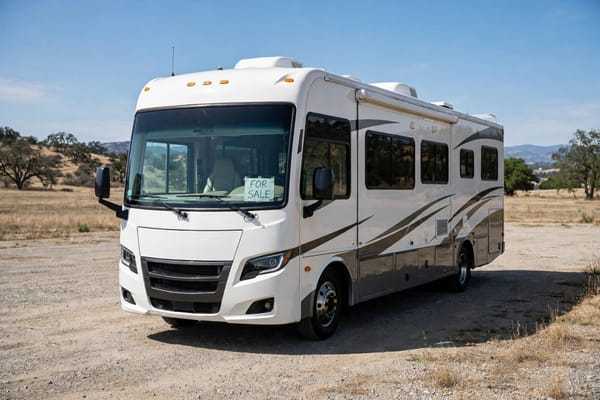
| Class A Motorhome | 26 – 45 ft | 4 – 10 people | Maximum living space, luxury features, massive storage | High purchase price, lower MPG, often requires a towed vehicle ("toad") |
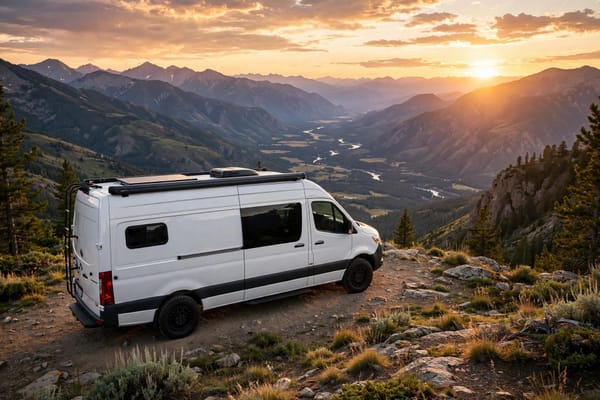
| Class B (Camper Van) | 18 – 24 ft | 1 – 4 people | Easy to park, great fuel economy, off-grid mobility | Compact living space, smaller wet bath, higher cost per square foot |
| Class C Motorhome | 21 – 33 ft | 4 – 8 people | Balanced space/handling, overhead sleeping bunk | Taller profile, moderate fuel economy |
| Travel Trailer | 12 – 38 ft | 2 – 10 people | Wide variety of layouts, unhitch tow vehicle for local travel | Requires matched tow vehicle, requires sway/hitch setup |
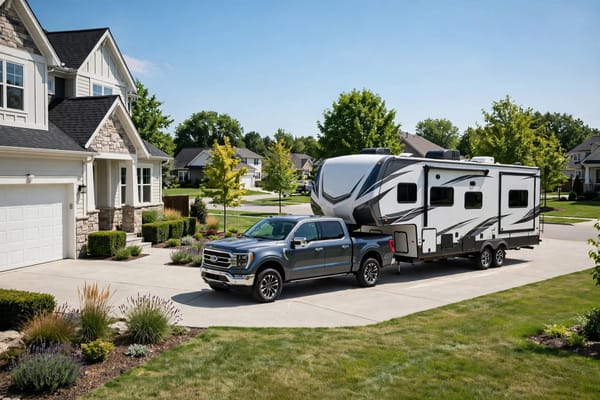
| Fifth-Wheel Trailer | 25 – 45 ft | 4 – 10 people | Bi-level layout, residential ceiling heights, stable towing | Requires 3/4-ton or 1-ton truck with bed hitch |
| Pop-Up Camper | 8 – 16 ft (folded) | 2 – 6 people | Extremely lightweight, low cost, easy to garage | Canvas setup required, minimal insulation, fewer luxury amenities |
| Truck Camper | 8 – 20 ft | 2 – 4 people | Mounts inside truck bed, go-anywhere 4x4 capability | Compact interior, payload limits require heavy-duty truck |
Step 3: Budget Beyond the Purchase Price
The sticker price is only one part of RV ownership. A realistic budget accounts for both acquisition costs and ongoing operating expenses.
Initial Purchase Costs
- Purchase Price / Down Payment: Typically 10% to 20% down if financing.
- Sales Tax, Title, & Registration: State taxes and registration vary widely; budget 5% to 10% of purchase value depending on your local jurisdiction.
- Hitch Equipment & Brake Controllers: $500 to $2,500 for weight-distribution hitches or fifth-wheel assemblies.
- Certified Pre-Purchase Inspection: $400 to $1,200 (a critical investment that prevents expensive surprises).
- Initial Outfitting: $500 to $1,500 for essential sewer hoses, water pressure regulators, surge protectors, leveling blocks, and wheel chocks.
Ongoing Operating Costs
- RV Insurance: Specialized comprehensive coverage ranges from $600 to $2,500+ annually depending on value and usage (recreational vs. full-time).
- Storage Fees: If you cannot park your rig at home, secure indoor or outdoor facility storage averages $75 to $250+ per month.
- Routine Maintenance & Preventative Care: Budget $1,000 to $2,000 annually for roof seal inspections, bearing repacks, fluid changes, and tire replacements every 5 to 7 years.
- Campground & Membership Fees: Nightly campsite rates range from $0 (boondocking) to $40–$120+ per night at full-service resorts.
Step 4: New vs. Used RVs
            ┌────────────────────────────────────────┐
            │         Which Path Fits You?           │
            └────────────────────────────────────────┘
                   │                          │
        ┌──────────┴──────────┐    ┌──────────┴──────────┐
        │       NEW RV        │    │       USED RV       │
        ├─────────────────────┤    ├─────────────────────┤
        │ • Full Warranty     │    │ • Lower Entry Price │
        │ • Modern Tech/Decor │    │ • Low Depreciation  │
        │ • Higher Upfront Cost│   │ • DIY / As-Is Risk  │
        └─────────────────────┘    └─────────────────────┘
Buying New
- Pros: Backed by manufacturer warranties, spotless interior condition, modern lithium/solar packages, and easier financing approval.
- Cons: Steepest depreciation occurs within the first 2–3 years; initial "break-in" adjustments and warranty repairs may take time at busy dealership service centers.
Buying Used
- Pros: Significant cost savings (often 20% to 40% below original MSRP), proven track record of reliable components, and previous owners often include upgraded accessories.
- Cons: Most sales are strictly "as-is"; hidden water intrusion or deferred maintenance can lead to costly repairs without a pre-purchase inspection.
Step 5: Dealership vs. Private Seller
Deciding where to purchase depends on your negotiation style, financing preferences, and mechanical experience.
RV Dealerships
- Best For: Buyers seeking trade-in flexibility, in-house financing options, dealer warranties, and walkthrough orientations.
- What to Watch For: Documentation fees, high-pressure add-on sales (paint sealants, costly service contracts), and variable customer service after the sale.
Private Sellers
- Best For: Finding competitive prices and speaking directly with the person who maintained and operated the rig.
- What to Watch For: Verifying lien-free titles, out-of-state transfer paperwork, and securing third-party financing or cash transactions safely.
Step 6: The Inspection & Walkthrough Checklist
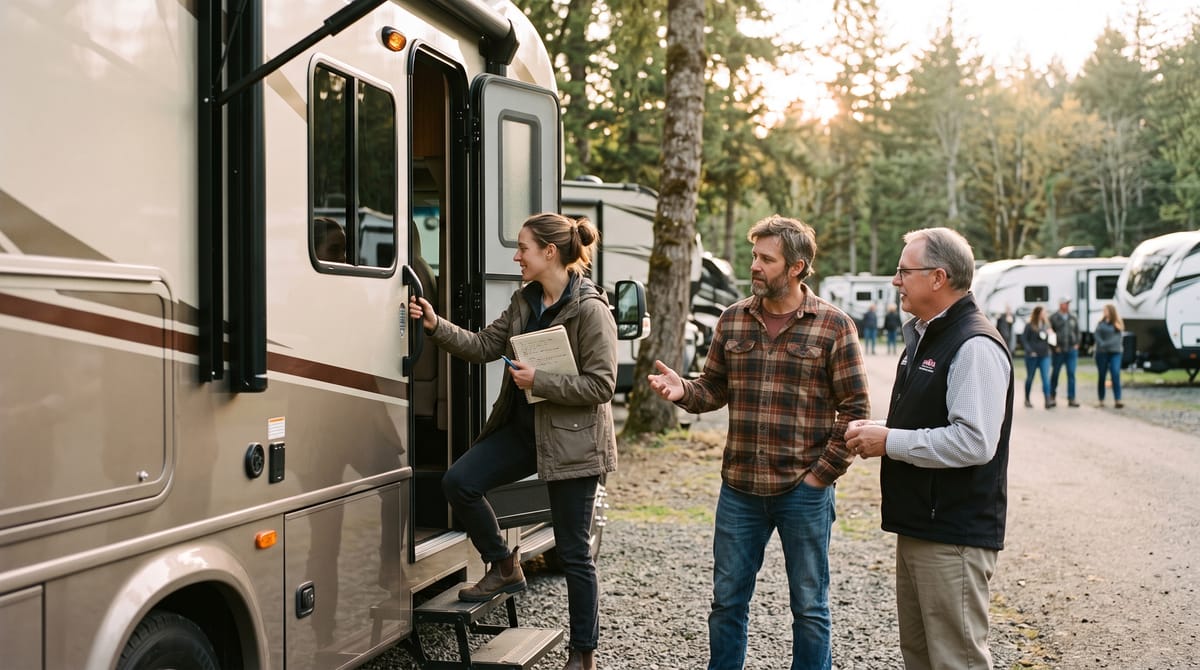
Never finalize an RV transaction without testing all functional systems. If buying used, hire an inspector certified by the National RV Inspectors Association (NRVIA).
Exterior Inspection
- Roof Condition: Inspect for cracked lap sealant, punctures, soft spots (indicating water damage), and vent cover integrity.
- Sidewalls & Seals: Check for delamination (wavy bubbles on fiberglass), cracked caulking around windows, and warped trim.
- Slide-Outs: Extend and retract all slide mechanisms; listen for abnormal motor strain and verify rubber wiper seals sit flush.
- Tires & Undercarriage: Check tire DOT date codes (tires over 5–6 years old often need replacement regardless of tread), frame rust, and axle alignment.
Interior & Systems Test
- Moisture Check: Look inside upper cabinets, around skylights, and under the mattress for water stains, soft floor sections, or musty smells.
- Plumbing System: Pressurize the system with the water pump; test all faucets, flush toilets, and check under sinks for active leaks.
- Electrical & Appliances: Test air conditioners, furnace, refrigerator (on both AC power and propane modes), inverter, and shore power connections.
- Propane System: Ensure propane leak detectors operate correctly and all burners ignite cleanly with blue flames.
Essential Features to Consider for 2026
Modern RVs offer advanced capabilities that significantly enhance convenience and livability:
- Lithium Battery & Solar Packages: Upgraded lithium iron phosphate (LiFePO4) battery banks and roof-mounted solar panels enable off-grid power without constant generator use.
- Four-Season Insulation: Heated holding tanks, enclosed underbellies, and dual-pane windows prevent frozen plumbing in sub-freezing weather.
- Efficient Floor Plans: Look for multifunctional furniture (murphy beds, convertible dinettes) and pass-through exterior storage bays for oversized gear.
- Smart Monitoring Systems: Modern control panels allow you to monitor tank levels, control slides, and adjust climate zones directly from your smartphone.
Top RV Buyer Mistakes to Avoid
- Exceeding Vehicle Towing Limits: Never rely on "dry weight." Always calculate your vehicle’s tow capacity based on the RV’s Gross Vehicle Weight Rating (GVWR), payload capacity, and hitch tongue/pin weight.
- Buying Too Big Too Soon: Massive rigs can make mountain driving and campsite booking stressful. If in doubt, rent a similar size first to test your comfort level.
- Skipping the Independent Inspection: Cosmetic cleanliness often hides internal roof leaks or electrical malfunctions. A professional inspection pays for itself.
- Ignoring Storage Logistics: Measure your driveway or verify local HOA rules and storage lot availability before bringing an RV home.
Frequently Asked Questions
How much does a quality RV cost in 2026?
Entry-level travel trailers range from $20,000 to $45,000, while mid-range fifth wheels and Class C motorhomes average $50,000 to $120,000. Luxury Class A motorhomes and custom camper vans typically range from $120,000 to $300,000+. Quality pre-owned models are available across all price brackets at 20% to 40% discounts.
What credit score is required to finance an RV?
Most RV lenders look for a credit score of 660 or higher for standard interest rates, with scores above 720 unlocking the best loan terms. RV loan terms commonly span 10 to 20 years depending on the financed amount.
Do I need a special driver's license to drive an RV?
In the United States, a standard non-commercial driver's license is sufficient for the vast majority of recreational vehicles. A special non-commercial Class A or B license is typically only required if the rig’s Gross Vehicle Weight Rating (GVWR) exceeds 26,000 lbs or if towing a trailer over 10,000 lbs in specific states (such as California, Texas, or Pennsylvania). Always check your state’s DMV regulations.
When is the best time of year to purchase an RV?
Late fall and winter (October through February) generally offer the best buying opportunities. Dealerships are motivated to clear out prior model-year inventory, and private sellers often prefer selling over paying winter storage fees.
Find Your Ideal RV Match
Finding the right RV doesn't have to mean spending endless hours cross-referencing floor plans, specs, and classified listings.
Visit RV Matcher to compare models, filter by your vehicle's specific towing capacity and budget, and get personalized recommendations tailored to your travel style. Start your journey today and hit the open road with complete confidence!