New vs Used RV: Which Should You Buy?
New vs used RV: compare depreciation, warranties, financing, and inspections to find the right choice for you, plus the best used sweet spot by budget.

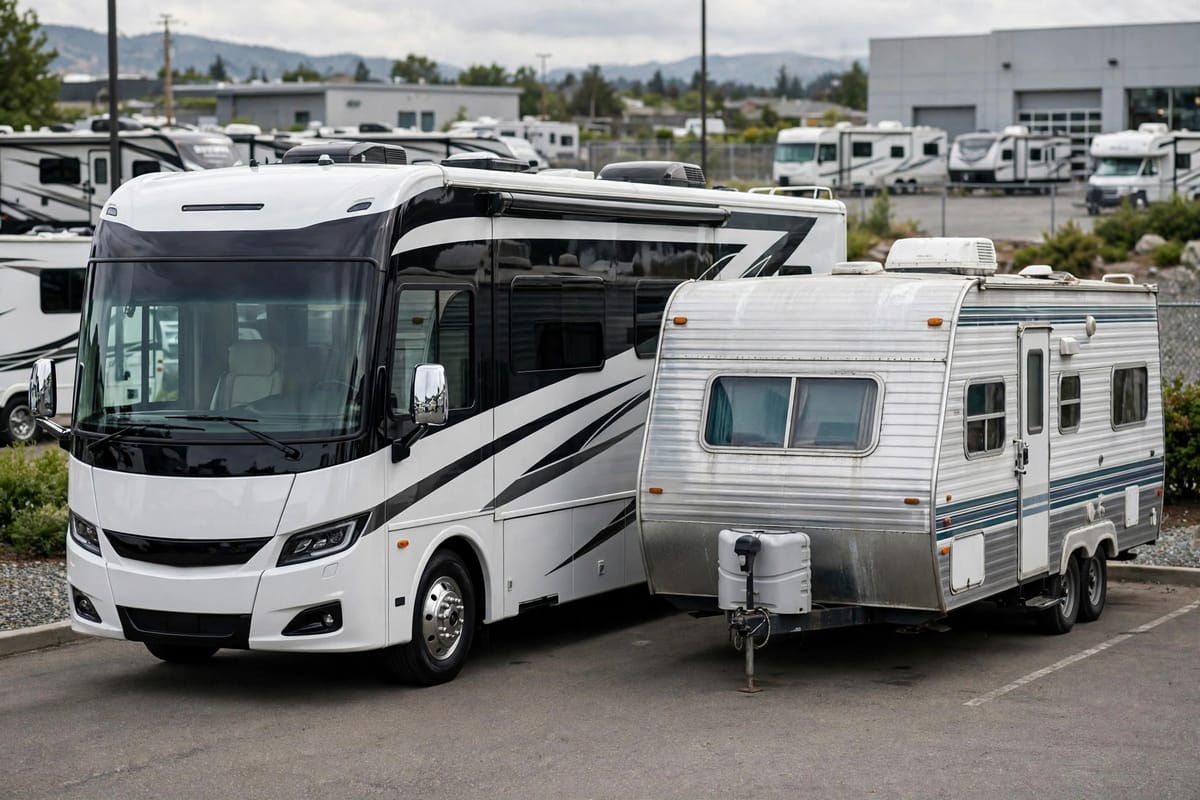
It's the first question almost every RV shopper faces: buy new off the lot, or buy used and let someone else absorb the depreciation? The new vs used RV debate has no universal winner. The right answer depends on your budget, your mechanical comfort, how you'll use the rig, and how much uncertainty you can tolerate.
This guide lays out the real trade-offs: depreciation, warranties, financing differences, insurance, and inspections. By the end, you'll know which camp you're in. And whichever you choose, you'll find both new and used RVs for sale on RV Matcher.
The Depreciation Reality
Let's start with the factor that drives most buyers toward used: new RVs lose value fast. The steepest drop happens in the first few years, which is why a three-year-old coach can sell for dramatically less than its original sticker price while offering nearly the same experience.
This isn't a reason to never buy new; it's the price of being the first owner. You pay for the full warranty, your choice of floor plan and options, and the certainty of the rig's history. But go in with eyes open: if you finance a new RV with a small down payment, you may owe more than it's worth for the first couple of years.
The flip side is what makes used buying so attractive. Once the early depreciation is absorbed by the first owner, values tend to flatten out. A well-kept five-to-eight-year-old RV often holds its value reasonably from there, which means your cost of ownership drops substantially. For budget-conscious buyers, this is the single strongest argument in the new vs used RV debate.
New vs Used RV: Warranty Compared
New RVs come with manufacturer warranties, typically covering the house for one to two years, with the chassis powertrain covered separately (often longer). That warranty is real peace of mind, but know its limits: warranty work means scheduling with a dealer, waiting for authorization, and sometimes waiting weeks for parts. New RVs also have a well-known "shakedown" period where factory defects reveal themselves. Budget your first months for warranty visits, not just adventures.
Used RVs are generally sold as-is, especially private-party. No warranty, no safety net. What you see is what you get, which is why the inspection matters so much (more below). The risk is real, but so is the discount: you're being compensated for accepting it.
The middle path: certified or dealer-sold used RVs sometimes include limited warranties, and third-party extended service contracts are available for used purchases. Read exclusions carefully before paying for one; seals, gaskets, and pre-existing conditions are commonly excluded, and those are frequent sources of RV repair bills.
New vs Used RV Financing Differences
How you pay is part of the decision, and lenders treat new and used RVs differently.
New RVs qualify for the best rates and longest terms, often 10 to 20 years on motorhomes. Lower rates and longer terms mean lower monthly payments, which is part of why new feels affordable. Remember that a longer term also means paying much more interest over time and staying underwater on the loan longer.
Used RVs typically carry slightly higher rates and shorter maximum terms, and many lenders set age or mileage cutoffs (commonly around 10 to 15 years old, varying by lender). Older, cheaper RVs can be harder to finance at all, which pushes some buyers toward personal loans or cash.
The practical math: a used RV at a slightly higher rate often still costs far less per month than a new RV at the best rate, because the principal is so much smaller. Run the total cost, not just the monthly payment. And whatever you buy, get pre-approved before shopping; sellers take financed-ready buyers far more seriously. Our RV financing guide walks through the full process.
Insurance and Ongoing Costs
Insurance follows value: insuring a new $150,000 motorhome costs more than insuring a used $40,000 one. That gap persists every year you own it. Registration and taxes (in states that charge them on RVs) also scale with value.
Maintenance is where the comparison gets interesting. New RVs need warranty visits but little out-of-pocket repair in the early years. Used RVs need a maintenance budget from day one: tires age out every five to seven years regardless of miles, seals need resealing, and appliances have finite lives. A smart used buyer budgets a repair reserve; a smart new buyer budgets for the shakedown period and the eventual end of warranty.
Neither is "cheaper to own" in all cases. New costs more in depreciation, insurance, and payments; used costs more in maintenance risk and your time.
The Inspection Factor
This is the hinge of the whole decision.
Buying new, your inspection is a pre-delivery walkthrough: systems are new, and defects are the dealer's problem to fix. Still do a thorough PDI (pre-delivery inspection) and don't accept the rig until everything works.
Buying used, the inspection is everything. A professional pre-purchase inspection, typically a few hundred dollars, is the best money in the transaction. It catches the water intrusion, worn tires, tired batteries, and deferred maintenance that separate a bargain from a money pit. Walk through our RV inspection checklist first, then hire a certified inspector before money changes hands.
Rule of thumb: if you're not willing to pay for an inspection, you're not ready to buy used. And if a seller resists an inspection, you're looking at the wrong RV.
Who Should Buy New
Buy new if several of these describe you:
- You want a specific floor plan or options that are hard to find used.
- You plan to full-time or travel heavily and want maximum warranty coverage from day one.
- You value certainty over savings and don't want to think about the previous owner's maintenance habits.
- Your budget comfortably absorbs the depreciation without stretching your finances.
- You're not mechanically inclined and prefer dealer support to DIY troubleshooting.
New buyers should still negotiate hard, shop model-year changeovers, and verify pricing against the market. Paying sticker because it's new is how buyers overpay the most.
Who Should Buy Used (and the Sweet Spot)
Buy used if several of these describe you:
- Value matters most. You want the most RV for your dollar.
- You're handy or willing to learn basic maintenance.
- You're unsure about the lifestyle and want a lower-cost way to try it. (Many first-timers buy a used rig, learn what they actually want, then upgrade.)
- You can pay cash or put down a large down payment, sidestepping financing hassles on older rigs.
The used sweet spot is generally three to eight years old: the brutal early depreciation is done, modern features and construction are present, and financing is still straightforward. Under that age you pay a premium for newness; much older and you trade savings for increasing maintenance risk, though well-kept older rigs from quality brands remain excellent values for handy buyers.
Whatever age you target, verify the price against recently sold listings and RV Matcher's price-check tool. In the used market, the buyer who knows the data wins.
New vs Used RV: The Decision Framework
Still torn? Answer these five questions honestly:
- What's my real budget, including insurance, storage, and a maintenance reserve?
- How will I use it? Occasional weekends favor used; full-timing favors the warranty and reliability of new (or nearly new).
- How handy am I? Be honest. Used RVs reward DIY skills; new RVs reward warranty patience.
- How long will I keep it? Short ownership punishes new buyers through depreciation. Long ownership narrows the gap.
- What does the math say? Price two comparable options (one new, one 4–6 years old), add five years of payments, insurance, and estimated maintenance, and compare totals.
Most buyers land on used for their first RV and never look back. A meaningful minority buys new for the warranty and the exact floor plan, and they're happy too. The only wrong answer is buying more RV than your budget supports, new or used.
Is it better to buy a new or used RV?
How much does a new RV depreciate in the first year?
Can you finance a 10-year-old RV?
What is the best age to buy a used RV?
Should a first-time buyer get a new or used RV?
Browse New and Used RVs on RV Matcher
Whether you're team new, team used, or still deciding, the next step is the same: look at real rigs at real prices.
Browse new and used RVs for sale on RV Matcher — filter by type, price, and location, check what similar RVs actually sold for, and run any candidate through the free price-check tool before you make an offer.