RV Depreciation: How Fast RVs Lose Value (by Type & Year)
How fast do RVs depreciate? Typical first-year and 5-year value loss by RV type, what slows depreciation, and the best ages to buy or sell.

Every RV starts losing value the day it is bought — and the curve is steeper than most owners expect. Understanding depreciation is not just trivia for buyers hunting deals. If you are selling, it tells you what your RV is actually worth today, when the smartest time to sell is, and how to price against buyers who have done this math too.
This guide lays out typical depreciation curves by RV type, explains what speeds value loss up or slows it down, and identifies the sweet-spot ages for selling — and for buying.
How Fast Do RVs Depreciate? The Short Answer
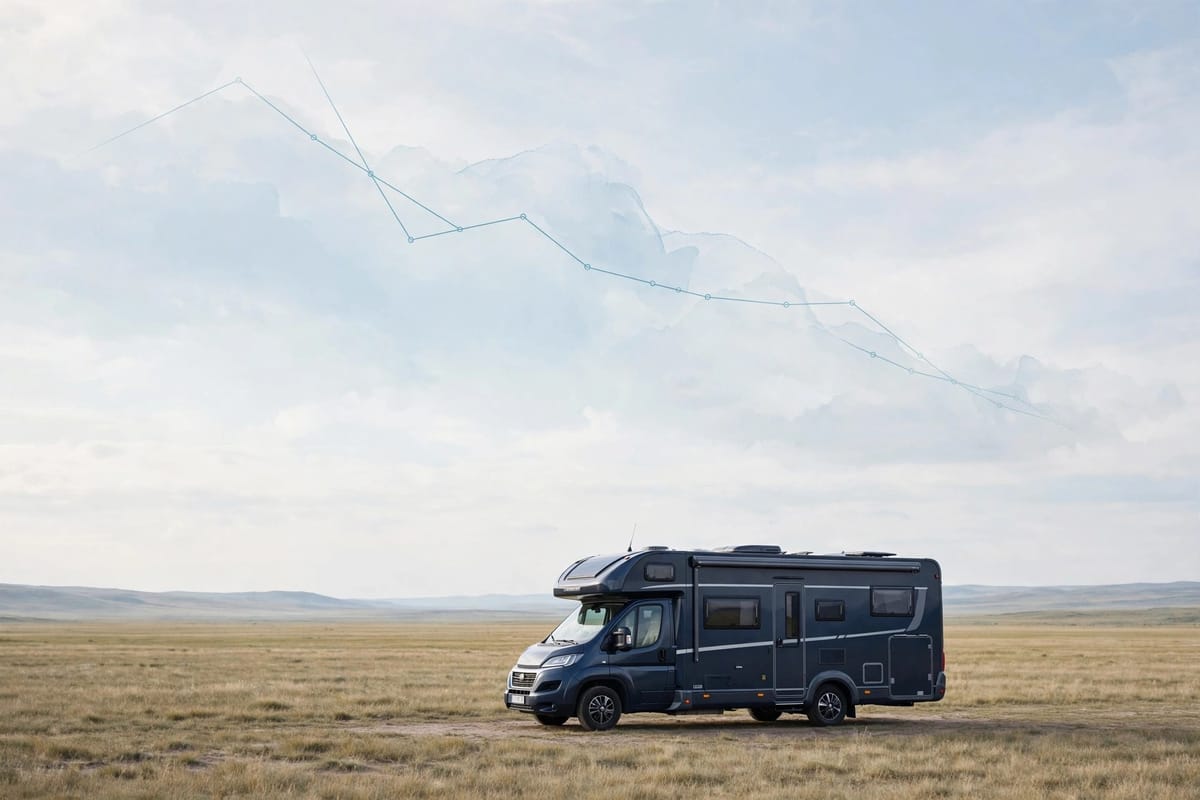
Valuation guides and market analyses consistently report the same shape: the biggest hit comes first. A brand-new RV typically loses around 15 to 25 percent of its value in the first year — roughly 18 to 22 percent is the most commonly cited range — and then sheds a few percentage points of its original price each year after that. By year five, most RVs have lost roughly a third to a half of their original value, depending on type.
After about year five or six, the curve flattens: annual depreciation slows to a few percent per year until around year nine or ten, when motorhomes often take another noticeable step down as major systems age and financing gets harder for buyers. Past fifteen years, most RVs are valued more on condition and functionality than on any schedule — a well-kept older unit holds a floor value as long as everything works, while a neglected one of the same age can be nearly unsellable at any price.
These are industry-reported averages, not guarantees for your specific rig. Brand, condition, maintenance history, and market demand move individual RVs well off the average in both directions.
Depreciation by RV Type
Not all RVs lose value at the same rate. Larger, more complex, more expensive rigs generally depreciate faster in percentage terms — there is simply more value to lose, and their buyers are pickier about age.
| RV type | Typical loss after ~3 years | Typical loss after ~5 years | Notes |
|---|---|---|---|
| Class A motorhome | ~30–35% | ~45–50% | Steepest curve; diesel pushers hold better than gas |
| Class B motorhome (camper van) | ~30–33% | ~47–50% | Strong demand softens the curve vs. Class A |
| Class C motorhome | ~26–27% | ~37–38% | Among the best motorized retention |
| Fifth wheel | ~19–26% in year 1 | ~45% | Heavy first-year drop, then steadier |
| Travel trailer | ~21% in year 1 | ~36–38% | Steady performers; premium brands do better |
A few patterns worth noticing. Class C motorhomes and quality travel trailers hold value better than their bigger siblings — they hit the sweet spot of capability without the price tag that makes buyers demand newness. Fifth wheels take a disproportionate first-year hit, which makes barely-used fifth wheels some of the best values on the used market. And Class B camper vans, despite the five-year figure, benefit from relentless van-life demand that keeps clean used vans moving fast.
If you are selling a motorhome specifically, our Class A, B, and C seller guides break down pricing by class in more detail.
What Slows Depreciation (and What Speeds It Up)
Brand reputation. This is the single biggest brand-level factor. Airstream is the standout — its trailers routinely post the best value retention in the industry, with well-kept examples losing roughly half the value of a comparable mass-market trailer over five years. Winnebago (especially Class B), Newmar, Tiffin, and Leisure Travel Vans also consistently hold value better than average. Generic builder-grade brands, meanwhile, can lose half or more of their value in five years.
Condition and maintenance records. A documented service history is worth real money. Buyers pay premiums for RVs with complete records because it de-risks the purchase — and appraisers notice too. Conversely, visible neglect (stained ceilings, soft floors, aged tires, deferred seal maintenance) pushes offers below book value fast.
Mileage (motorized). Mileage matters less than most sellers fear on well-maintained motorhomes — a serviced diesel with records can out-value a neglected low-mileage unit. But very high mileage on gas Class C and B chassis does weigh on price, since buyers mentally budget for drivetrain work.
Upgrades. Lithium batteries, solar arrays, and quality suspension upgrades help a listing stand out and can nudge the price up, but rarely return their full cost. Cosmetic renovations are polarizing: tasteful, neutral updates help; bold personal taste shrinks your buyer pool.
Market timing. Depreciation is not purely mechanical — demand shifts move prices. The post-2020 RV boom inflated used values, and the market has been normalizing since. Selling into strong spring demand versus a soft fall market can matter as much as a year of age.
The Sweet Spots: Best Ages to Sell (and Buy)
Depreciation curves create windows where sellers keep the most and buyers get the best deal:
Selling sweet spots. Year 3 is widely considered the first smart exit: you have absorbed the brutal first-year hit, but the RV still reads as "nearly new" to buyers and commands strong money. Year 7 is the second window — you are past the steep middle years of the curve, the RV is fully depreciated into its flatter phase, and each additional year costs you relatively little. Selling between years 4 and 6 means eating the steepest part of the curve with the least to show for it.
Buying sweet spots. Flip it around: a 3-to-4-year-old RV has typically already lost 30 to 40 percent of its new price while remaining essentially modern — the best value in the market for buyers. This is exactly why pricing your 4-year-old RV requires accepting what the curve says, not what you paid.
Seasonal sweet spot. List in late winter or early spring. Buyers shopping for camping season pay more and decide faster than fall bargain hunters. A spring listing can easily outperform a fall listing by enough to matter — see how long it takes to sell an RV for seasonal timelines.
How Depreciation Should Change Your Pricing
If you are selling, the curve is your pricing reality check:
- Look up book value first. JD Power values reflect where the market actually is for your year and type — start there, not from your purchase price.
- Adjust for your position on the curve. A 2-year-old RV priced like new will sit. A 7-year-old RV in excellent condition can price at the top of its age band with confidence.
- Do not price in your upgrades at cost. That $4,000 solar install might add $1,500 to your sale price. Price the RV, mention the upgrades as tiebreakers.
- Compare against sold listings, not asking prices. Dealer asking prices ignore depreciation; sold prices do not. Our RV pricing guide walks through the comparable-research process.
- Factor in your loan. If you financed with a small down payment, you may owe more than the RV's depreciated value in the early years — being underwater is common in years 1 through 3. Know your payoff before you list: selling with a loan.
How to Slow Your RV's Depreciation as an Owner
You cannot stop depreciation, but you can bend the curve in your favor:
- Maintain obsessively and keep records. A folder of service receipts is the highest-ROI "upgrade" in RVing. Buyers and appraisers pay for documented care.
- Store it covered. UV damage to roofs, seals, graphics, and interiors is the most visible aging signal. Indoor or covered storage pays for itself at resale.
- Stay on top of seals. Annual roof and seam inspection prevents the water intrusion that destroys value faster than any calendar aging.
- Keep it stock-ish. Wild customizations shrink your buyer pool. Reversible, neutral upgrades (solar, lithium, vent covers) help; purple shag carpet does not.
- Mind the mileage sweet spot. On motorized RVs, extremely low mileage on an old unit worries buyers (seals dry out, systems seize from disuse). Regular, moderate use with maintenance is the ideal history.
- Sell before the 10-year step-down. If you are on the fence at year 8 or 9, the math usually favors selling now rather than after the next depreciation step.
- Fix the cheap stuff, disclose the rest. A few hundred dollars in sealant, detailing, and minor repairs routinely returns more than it costs, while hiding problems destroys buyer trust and invites lowball offers once discovered.
Do RVs lose value faster than cars?
What RV type holds its value best?
Does mileage really affect RV resale value?
When is the worst time to sell an RV?
Can I avoid being underwater on my RV loan?
Ready to Sell at the Right Point on the Curve?
Depreciation is only a loss if you ignore it. Price your RV where the market actually is, list in the strong season, and you will sell faster and net more than sellers still pricing from their purchase receipt.
Check your RV's current value, then create your listing on RV Matcher — and let the curve work for you instead of against you.