What Paperwork Do You Need to Sell an RV? (Complete Closing Checklist)
What paperwork to sell an RV do you actually need? Title, bill of sale, lien release, odometer disclosure and the full closing checklist for a smooth sale.

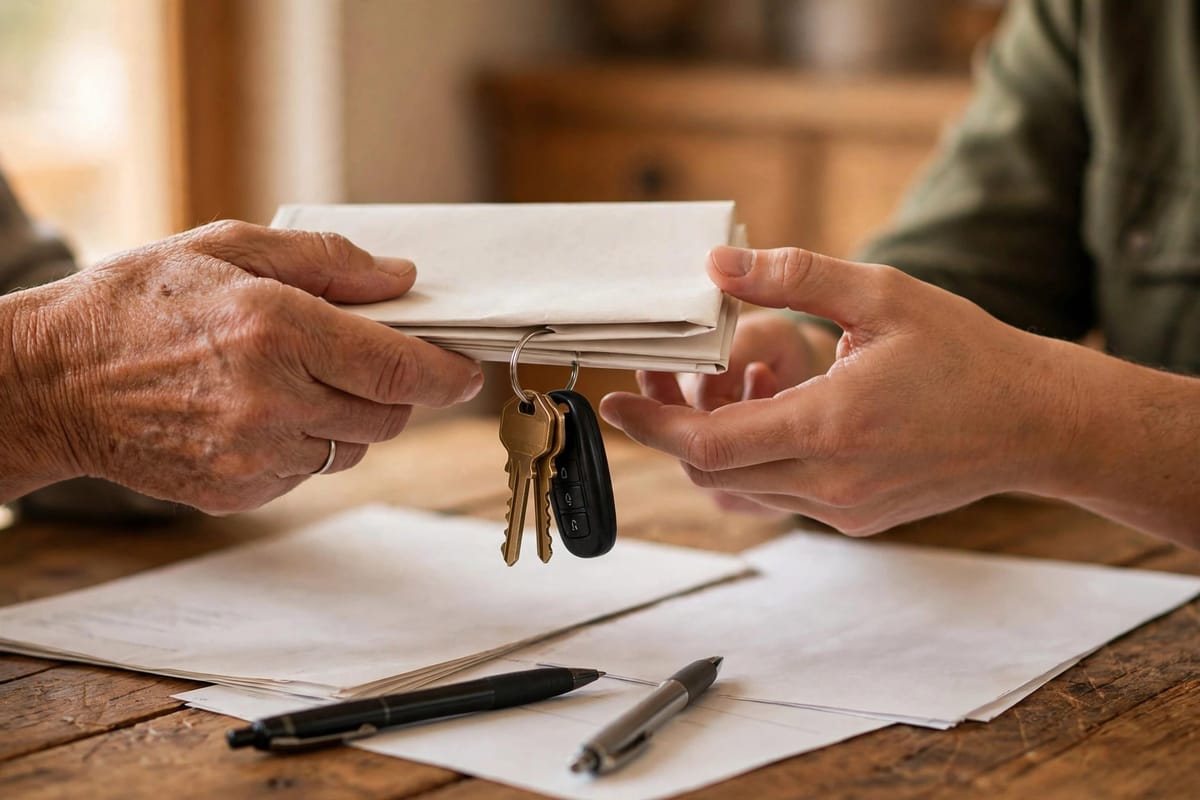
The paperwork to sell an RV is what separates a smooth closing from a deal that falls apart in the driveway. Buyers walk away from great rigs every week because the seller can't produce a clean title, doesn't have a bill of sale ready, or discovers a forgotten lien.
This is the definitive checklist of every document you need: title, bill of sale, odometer disclosure, lien payoff and release, your state's transfer forms, and the supporting paperwork that makes buyers confident enough to say yes on the spot. Get this folder together before you list — then list your RV for free on RV Matcher.
The Paperwork to Sell an RV: The Core Documents
Six documents form the backbone of nearly every private RV sale in the United States. Gather these first; everything else is supporting material.
The title (certificate of title)
The title is the single most important piece of paperwork to sell an RV. It proves you own the rig and have the legal right to transfer it. Find yours now — not the week of the sale. If it's lost, apply for a duplicate through your state's DMV or title office immediately, because replacements typically take weeks, not days.
Before listing, verify three things: your name matches your ID, the VIN matches the RV's VIN plate, and no unexpected liens are listed. Any mismatch becomes buyer leverage — or a deal-killer.
Bill of sale
Write a bill of sale for every RV sale, even if your state doesn't strictly require one. It protects both sides and creates a paper trail of exactly what was agreed. A solid RV bill of sale includes:
- Full legal names and addresses of buyer and seller
- Year, make, model, and VIN of the RV
- Odometer reading (for motorized RVs)
- Agreed sale price and date of sale
- "As-is" language if you're selling without warranty, or the warranty terms if you're offering any
- Signatures of both parties, with each keeping a signed copy
Keep it to one clear page — no lawyer needed.
Odometer disclosure statement
For motorhomes, expect to sign an odometer disclosure certifying the mileage is actual — federal law requires it for most motorized vehicles, and many states extend it to RVs. Some states print it on the title; others use a separate form. Towables without odometers are generally exempt, but when in doubt, disclose.
Lien payoff and lien release
If you still owe money on the RV, your lender holds a lien — and you can't deliver a clean title until it's satisfied. Call your lender before you list and ask for the current payoff amount and their exact lien-release process: some release electronically within days, others mail paper releases that take weeks. See our guide to selling an RV with a loan for the full payoff and escrow walkthrough.
Notice of transfer / release of liability
Most states require the seller to notify the DMV of the ownership change — a release of liability or notice of transfer. Until it's filed, tickets, tolls, and liability can trace back to you. Many states allow online filing in minutes; don't skip it.
Smog, safety, and inspection certificates
A few states require a smog check, safety inspection, or emissions certificate before transfer — usually for motorhomes, rarely for towables. Check your DMV's current rules before setting a closing date; a failed inspection delays everything.
Supporting Paperwork That Builds Buyer Confidence
The documents above make the sale legal. The documents below make the sale happen — they answer the buyer's unspoken question: "Has this RV been taken care of?"
Service and maintenance records. Oil changes, roof reseals, tire replacements, winterization receipts — organized chronologically in a folder. Documented maintenance history de-risks the purchase, and buyers routinely pay more for it.
Owner's manuals. The RV manual plus appliance manuals (fridge, AC, furnace, water heater, solar, inverter). Lost them? Most manufacturers offer free PDF downloads — print the key ones.
Warranty transfer documents. If any warranty is transferable, bring the paperwork and know the process and fees. A transferable warranty is a selling point; one you "forgot to mention" is a trust-killer.
Recall clearance. Check whether your RV has open recalls and get them remedied before the sale — or disclose them honestly.
Registration and insurance documents. Current registration proves the RV is road-legal today. Keep your insurance active until the title is signed over, then cancel or transfer it.
How the Paperwork to Sell an RV Varies by State
RV paperwork isn't one-size-fits-all — titling and transfer rules are set state by state. Here's where they differ most:
| Area | How it varies |
|---|---|
| Title transfer | Some states use the title itself as the transfer document; others require a separate application for title |
| Bill of sale | Required by law in some states, merely recommended in others — write one regardless |
| Notarization | A few states require the title signature to be notarized; most don't |
| Sales tax collection | Some states make private sellers collect sales tax; most leave it to the buyer at registration |
| License plates | Some states let plates stay with the vehicle; others require you to remove and surrender them |
| Release of liability | Online filing in many states, mailed forms in others, different deadlines |
Check your DMV's website before you list — requirements change, and a five-minute check beats a ruined closing day. For interstate sales, confirm both states' requirements, since the buyer's state may ask for documents yours doesn't issue.
Getting Paid: Closing Mechanics That Protect You
Paperwork and payment happen together, so plan the money side with the same care.
Verify cashier's checks. Check fraud is the most common RV sale scam — call the issuing bank (using a number you look up yourself) and verify before signing anything over.
Close at a bank for large amounts. Inside a branch, funds are verified and transferred on the spot — and a notary is usually available.
Consider escrow for complex deals. With a lien payoff, an out-of-state buyer, or a high-dollar motorhome, a licensed escrow service protects everyone.
Never accept overpayment. The "buyer" sends a check for more than the price and asks you to refund the difference — then the check bounces. Walk away from any deal structured this way.
Document the payment. Note the payment method, check numbers, and amounts on the bill of sale. Both parties should leave with proof of exactly what changed hands.
Your RV Sale Closing-Day Checklist
Print this and work through it with the buyer:
| # | Item | Done |
|---|---|---|
| 1 | Title in hand — name, VIN, and lien status verified | ☐ |
| 2 | Payoff quote obtained from lender (if lien exists) | ☐ |
| 3 | Lien release in hand or release process confirmed with lender | ☐ |
| 4 | Bill of sale completed — names, VIN, price, date, as-is language | ☐ |
| 5 | Odometer disclosure signed (motorized RVs) | ☐ |
| 6 | State transfer / release-of-liability form ready to file | ☐ |
| 7 | Smog/safety certificate obtained (if your state requires it) | ☐ |
| 8 | Service records, manuals, and warranty docs organized in a folder | ☐ |
| 9 | Payment verified (bank-verified check, wire, or in-branch closing) | ☐ |
| 10 | Both parties signed; each keeps a copy of everything | ☐ |
| 11 | Release of liability filed with the DMV | ☐ |
| 12 | Insurance cancelled or transferred; plates handled per state rules | ☐ |
Paperwork to Sell an RV: Mistakes That Kill Deals
- Discovering a lien at closing. Call your lender before you list, not after you accept an offer.
- A lost title with a buyer waiting. Duplicate titles take weeks. Order early.
- No bill of sale. It costs nothing to write and protects everything.
- VIN mismatch. Verify the title VIN against the RV's VIN plate before the buyer does.
- Forgetting the release of liability. Toll violations in your name, months later — file the form.
- Accepting an unverified cashier's check. One phone call to the issuing bank prevents the most common scam in private vehicle sales.
- Cancelling insurance too early. Keep coverage until the title is signed over.
- Assuming your state's rules apply everywhere. Interstate sales mean two sets of DMV requirements.
Get the paperwork to sell an RV right, and closing day becomes a formality — signatures, smiles, and a sold rig.
What is the most important paperwork to sell an RV?
Do I need a bill of sale to sell my RV?
Can I sell my RV if I still owe money on it?
What is a release of liability when selling an RV?
Do both parties need to be present to transfer an RV title?
Close With Confidence — List Your RV for Free
Paperwork done right turns closing day into a formality. Get your title, bill of sale, and lien release in order, pair this checklist with the full how to sell your RV fast playbook, then put your RV in front of buyers who are ready to move.
List your RV for free on RV Matcher — no listing fees, no commission, and your sale-ready RV goes live in front of thousands of active shoppers today.